


How to Fry Fish: Tips from A Pro Chef
Chef Andrew Ashmore shares his secrets for crispy, crunchy perfection, every time
This Lenten season, we reeled in L. Woods Tap & Pine Lodge Chef Partner Andrew Ashmore to give us his best tips on how to fry fish to ensure it’s crispy, crunchy, and perfectly cooked inside and out. (If you’ve been to L. Woods in Lincolnwood, you know that they take their signature Friday Wisconsin Fish Fry—lake perch served with salt and vinegar fries and house-made tartar sauce—very seriously…) Let’s get started!
Make a reservation for Lent at L. Woods Tap & Pine Lodge | Order carryout and delivery from L. Woods Tap & Pine Lodge
 Growing up in Michigan and spending summers in Glen Arbor in Northern Michigan, Chef Andrew says, “I loved the surf & turf at Joe’s Friendly Tavern, which used to be on the menu as a delicious cheeseburger served with Lake Michigan smelt, battered and fried until crisp. At home, I like to prepare a version of that nostalgic dish using walleye, which is another great freshwater fish that we love to use at L. Woods.”
Tip #1: Choose the Right Fish
 Start with light, flaky, white-fleshed varieties. These fish cook quickly and stay tender inside while crisping beautifully outside. “Our favorite at L. Woods is perch, but walleye, smelt and whitefish work well. If you prefer saltwater fish, cod or rockfish are great options, and when you want something extra special, try halibut when it’s in season,” Chef Andrew says. Stick to these types over denser fish such as salmon, mackerel, and tilapia, which don’t typically deliver that classic fish fry texture.
In the mood for something lighter? Try the recipe for Simply Grilled Branzino from Wildfire.
Tip #2: Use a Tabletop Fryer for Foolproof Results
 Chef Andrew recommends home cooks use a small tabletop deep fryer (like this one from Amazon) with a built-in thermometer for frying fish. “It’s generally safer, easier to control oil temperature, and will achieve a more consistent crispiness,” says Chef Andrew.
If a deep fryer is unavailable and you’re pan-frying, use a deep, wide pan, and ensure you have about 1 – 2 inches of oil in the pan. A smart investment is an infrared thermometer gun (such as this one on Amazon for $16.99), to ensure the oil in your pan reaches the perfect temperature for frying—350°F—Chef Andrew says. “The temperature of the oil is crucial. Oil that’s too cool will result in oily, soggy fish, and too high can mean fish that’s burned on the outside and undercooked on the inside. A good thermometer can help get you that perfect crispy, golden crust—don’t guess!”
Tip #3: Bread It Fresh, Fry Immediately
“One of the biggest mistakes people make when frying fish is breading it ahead of time,” says Chef Andrew. “If breaded fish sits too long, moisture seeps into the coating and it will get soggy.” For the crispiest results, he says to first pat the fish dry completely, season all over with salt and pepper, bread it, and then fry it immediately. This is the process he and the team at L. Woods uses for their signature Walleye Fish & Chips. Side note for the ideal finishing touch: “We like to season our house-made chips and French fries with sea salt and vinegar powder.”
Try to fry up the recipe for RPM Seafood’s Dover Sole Fish & Chips.
Tip #4: Cut for Even Cooking
 To perfect your fish and chips recipe, Chef Andrew recommends cutting fillets into ½-inch thick, long bias strips. Why this size? “If the fish is too thin, you risk it overcooking before crisping up, and if it’s sliced too thick, it might be golden on the outside, but be undercooked and slightly raw on the inside.” Uniform pieces will help ensure even cooking and consistent crunch.
Tip #5: Fry in Batches
 Be sure not to overcrowd your deep fryer or pan with too many pieces of fish, says Chef Andrew. “Overcrowding can make the oil temperature drop quickly, which leads to greasy, limp breading. Work in small batches if you have to, leaving space in between the pieces, and make sure you let the oil return to 350°F in between the batches.” Another pro chef tip he shares here: Listen closely while frying. “Typically, the loud bubbling sound of the fish frying in the oil will soften as the excess moisture in the breading and the fish have cooked off. When the breading is deep golden brown and the frying sound quiets down, it’s s sign that your fish is done.”
Tip #6: Drain Properly for Maximum Crisp
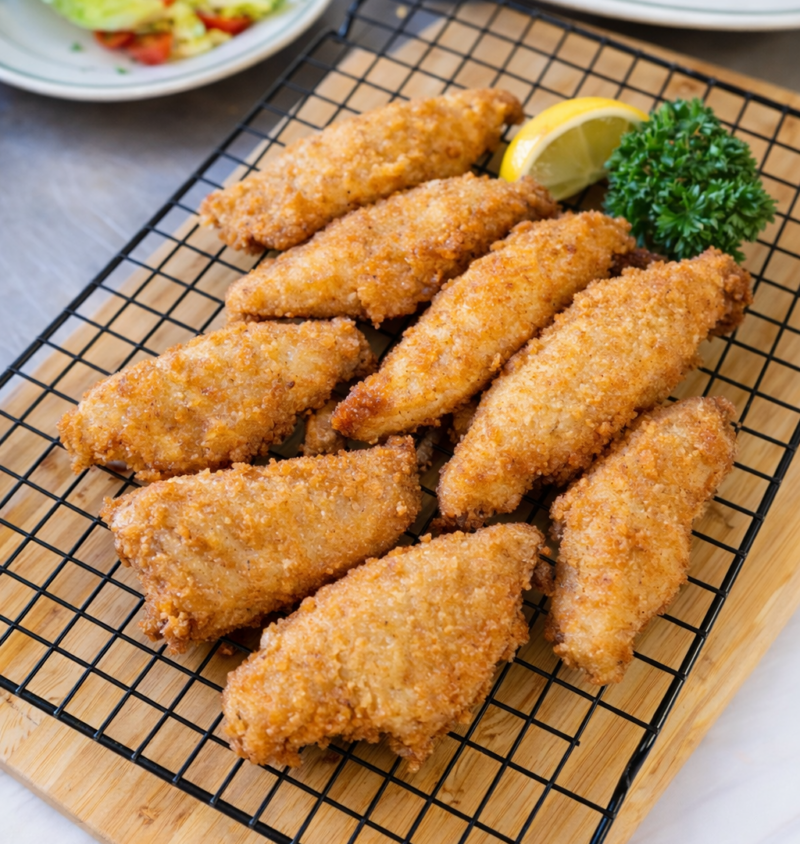 The moment fish comes out of the fryer matters just as much as the fry itself. “I like to rest my fried fish on a wire cooling rack to drain off the excess oil when it comes out of the fryer, the same kind you use to cool freshly baked cookies,” says Chef Andrew. Resting your finished product on a wire rack instead of a paper towel-lined plate allows air to circulate underneath so steam and excess oil draining off doesn’t soften the crust on the bottom of the fish. “This way, your fried fish will retain its crispiness all around!” says Chef Andrew.


